Skin treatment price ranges in Korea (from public data)
By KMedTrip editorial · Updated · Written with AI assistance · Reviewed by KMedTrip native-speaker review team
This guide is general information, not medical advice. KMedTrip is run by a government-registered foreign patient facilitator (an agency that helps international patients arrange medical care). We do not recommend, rank or receive payment from any hospital or clinic.
Key takeaways
Most skin and cosmetic treatments in Korea are “non-covered” services (not paid by Korean national health insurance). Each clinic sets its own fee.
Korea’s health insurance review agency (HIRA) publishes non-covered fee data. But many purely cosmetic treatments are not part of that public dataset.
Because of this, we do not publish a price table. Prices for the same treatment can differ a lot between clinics and between patients.
The most reliable number is a written, itemized quote (a price list that shows each item separately) for your own treatment plan.
Ask what is included before you agree: consultation, numbing cream, aftercare, follow-up visits and tax.
The special VAT refund for foreigners’ cosmetic procedures ended on 31 December 2025. Plan your budget on the full price, including VAT.
Where Korean price data comes from (public non-covered fee disclosure)
Figure 1. How Korean medical prices are set and published. ① Covered: price set by government. ② Non-covered: each clinic sets its fee. ③ Institutions report prices to HIRA. ④ HIRA publishes lowest / average / highest by region.
Covered vs non-covered
Korean medical services come in two groups:
Group
What it means
Who sets the price
Covered (geubyeo)
Paid partly by National Health Insurance
The government
Non-covered (bigeubyeo)
Not paid by national insurance
Each hospital or clinic
Most cosmetic skin treatments are non-covered. Foreign visitors without Korean health insurance usually pay the full price anyway.
The HIRA price disclosure
HIRA stands for the Health Insurance Review and Assessment Service. It is a public agency under the Ministry of Health and Welfare.
HIRA runs a non-covered fee disclosure system. It works like this:
Hospitals and clinics report their prices for a list of selected items.
HIRA publishes the data on its website and in its mobile app.
You can usually see the lowest, average and highest reported price for an item in a region.
In 2026, the disclosure covers 753 non-covered items. 74,449 medical institutions reported their prices. The data was published on 3 September 2026 (Ministry of Health and Welfare press release, checked Oct 2026). For comparison, in 2025 it covered 693 items from about 73,700 institutions (Ministry of Health and Welfare, Sep 2025).
Limits for international visitors
Cosmetic items are missing. Purely cosmetic procedures are not the focus of this disclosure. Cosmetic wrinkle-relaxing injections, fillers and cosmetic laser sessions are not on the official item list. Some skin- and hair-related items are on the list, for example hair transplant, surgery for heavy sweating (hyperhidrosis) and laser treatment for nail fungus (Ministry of Health and Welfare notice on disclosure items, checked Oct 2026).
The search is mainly in Korean. The HIRA English site (www.hira.or.kr/eng/main.do) explains the agency. It does not offer the full price search.
How to look at the data yourself
Where: go to www.hira.or.kr (Korean). Use the menu 조회·신청 (search and apply) → 비급여진료비정보 (non-covered fee information). You can also use HIRA’s mobile app, called 건강e음 (“Health e-eum”) (HIRA, checked Oct 2026).
What to do: search for the item name and choose a region.
What you see: the lowest, average and highest reported price for that item.
Cost: the public website is free to use.
Time: a few minutes, if you can read Korean or use a browser translation tool.
Typical ranges by treatment type
Figure 2. Four common pricing types. ① Single session: per session or per area. ② Package / course: priced as a course. ③ Needs assessment first: priced after consultation. ④ Skin disease treatment: may be priced differently.
We could not verify broad, government-published price ranges for common cosmetic skin treatments (as of Oct 2026). So we do not list numbers here.
Unofficial price lists online are often outdated or promotional. They may also leave out important details. HIRA’s public list does not include common cosmetic skin treatments, so there are no official ranges to quote for them (checked Oct 2026).
What we can say in general terms:
Pricing type
How it is usually priced
What to ask
Single session (for example, one laser or injection session)
Per session or per area
How many areas or units will be used?
Package or course (several sessions over weeks)
As a full course
Can I book a single session if my stay is short?
Needs assessment first (for example, scars, pigmentation or skin conditions)
Only after a consultation
Is there a consultation fee?
Skin disease treatment
May differ from cosmetic treatment
Will I pay the full fee as a foreign visitor?
If you are only in Korea for a short stay, you may not finish a course. Ask about this before you pay for a package.
Why your quote may differ
Figure 3. Six things that change your quote. ① Your skin and goals. ② Device or product used. ③ What is bundled in. ④ Who performs it. ⑤ Foreign patient services. ⑥ Tax (VAT).
Even for the “same” treatment, two quotes can be very different. Common reasons:
Your skin and goals. The doctor may suggest a different number of sessions, units or areas.
Device or product used. Different machines and products cost different amounts.
What is bundled in. Some quotes include numbing cream, aftercare products, follow-up checks or a consultation fee. Others list these separately.
Who performs it. It can matter whether a specialist doctor does or supervises the procedure.
Foreign patient services. Interpretation, coordination or an international patient desk may add costs. Ask how these are charged.
Tax (VAT, value-added tax). Cosmetic procedures are generally subject to 10% VAT (Korean VAT rules, as of Oct 2026). Ask whether your quote includes VAT.
About the VAT refund: For about ten years, foreign tourists could claim back VAT on many cosmetic procedures. That special refund ended on 31 December 2025. As of October 2026, it has not been restored. The current law still shows the end date of 31 December 2025, and the government’s 2026 tax revision plan does not bring it back. Bills to restore it have not passed (Restriction of Special Taxation Act Art. 107-3; Ministry of Economy and Finance; checked Oct 2026). Do not count on a refund for procedures done from 1 January 2026. See our VAT refund guide.
A warning about very low prices. They may cover only part of the treatment. Or they may be used to attract you, and then sell you more on the day. “Discounts” and “events” for foreigners through unofficial channels can also be linked to illegal brokers.
How to ask for a written itemized quote
Figure 4. A seven-step quote checklist. ① Get the quote in writing. ② Ask for each item separately. ③ Ask about extra treatment on the day. ④ Ask about VAT and card / currency fees. ⑤ Ask about refund and cancellation. ⑥ Check Medical Korea registration. ⑦ Keep your receipt.
When: before you travel, by email, or at the start of your consultation.
Cost: asking for a quote should not commit you to treatment. Ask if the consultation itself has a fee.
Use this checklist:
Get the quote in writing. Ask for email or paper, in a language you understand.
Ask for each item separately. Consultation, procedure, number of sessions or units, anesthesia (numbing), medicines, aftercare products and follow-up visits.
Ask about extra treatment on the day. Will they ask you first? How is it priced?
Ask about VAT and card or currency fees. Is VAT included? Is there a fee for paying by foreign card?
Ask about refund and cancellation rules, including any deposit.
Check Medical Korea registration. Make sure the clinic is registered to receive foreign patients (see our guide on checking registration). It takes about five minutes on www.medicalkorea.or.kr/en.
Keep your receipt. After treatment, ask for a detailed receipt and a statement of charges. Keep them for insurance or any dispute.
Clinics in Korea must make their non-covered fees easy for patients to find. For example, they keep a price booklet at the front desk. If the clinic has a website, the prices must be there too. A clinic may not charge more than the fee it has posted (Medical Service Act Art. 45 and Enforcement Rule Art. 42-2, checked Oct 2026). If something is unclear, ask before treatment starts, not after. For more questions, see questions to ask before your consultation.
Frequently asked questions
Can I see official prices for Botox or fillers in Korea?
Usually not. Many purely cosmetic items are not in HIRA’s public fee data. Ask clinics for a written quote instead.
Why don’t you list prices?
We could not find government-published ranges for common cosmetic skin treatments (as of Oct 2026). Unofficial lists are often outdated or promotional.
Will my Korean quote include VAT?
It depends on the clinic. Cosmetic procedures are generally subject to 10% VAT. Ask the clinic to say clearly, in writing, whether VAT is included.
Can I still get a VAT refund on cosmetic procedures?
No, not for procedures from 1 January 2026. The special refund ended on 31 December 2025 and had not been restored as of October 2026.
Is a very cheap offer a good deal?
Be careful. It may cover only part of the treatment, or come from an illegal broker. Compare full, itemized written quotes.
What should I keep after treatment?
Your detailed receipt, statement of charges, quote and messages. You may need them for insurance or a dispute.
If you’d like help planning, you can talk to a coordinator.
Sources
Health Insurance Review and Assessment Service (HIRA), non-covered fee information – https://www.hira.or.kr (accessed 2026-10)
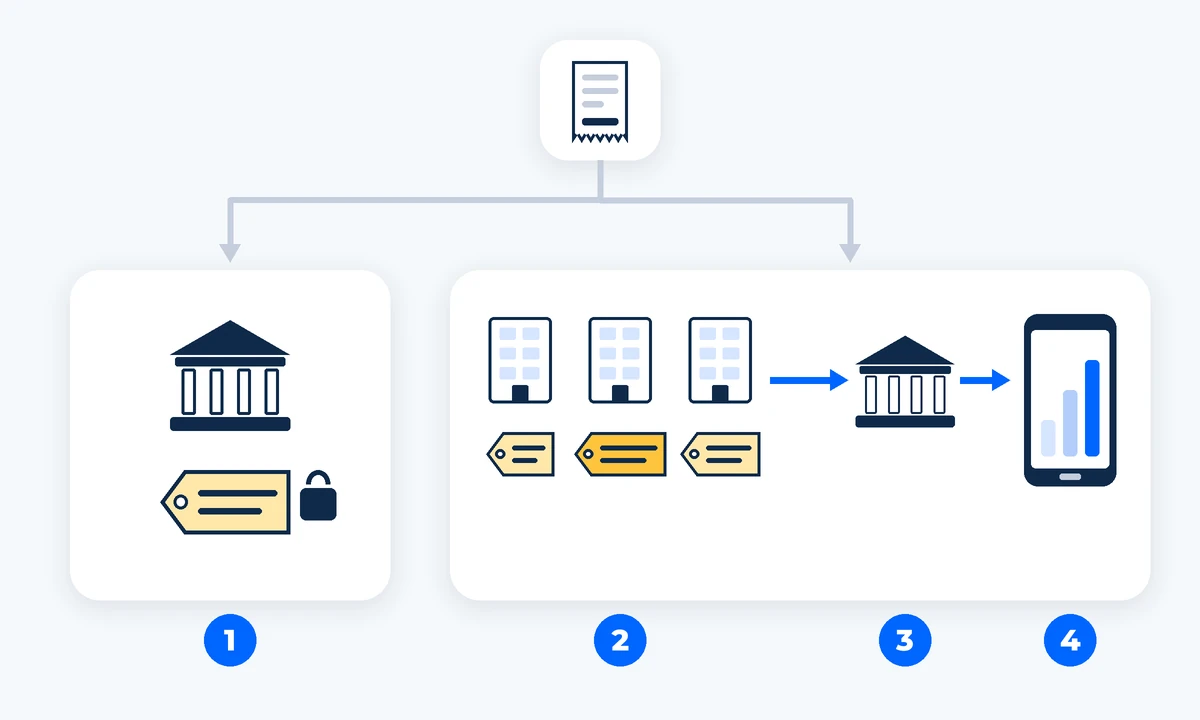 Figure 1. How Korean medical prices are set and published. ① Covered: price set by government. ② Non-covered: each clinic sets its fee. ③ Institutions report prices to HIRA. ④ HIRA publishes lowest / average / highest by region.
 Figure 2. Four common pricing types. ① Single session: per session or per area. ② Package / course: priced as a course. ③ Needs assessment first: priced after consultation. ④ Skin disease treatment: may be priced differently.
 Figure 3. Six things that change your quote. ① Your skin and goals. ② Device or product used. ③ What is bundled in. ④ Who performs it. ⑤ Foreign patient services. ⑥ Tax (VAT).
 Figure 4. A seven-step quote checklist. ① Get the quote in writing. ② Ask for each item separately. ③ Ask about extra treatment on the day. ④ Ask about VAT and card / currency fees. ⑤ Ask about refund and cancellation. ⑥ Check Medical Korea registration. ⑦ Keep your receipt.