How to check if a Korean clinic is registered for foreign patients
By KMedTrip editorial · Updated · Written with AI assistance · Reviewed by KMedTrip native-speaker review team
This guide is general information, not medical advice. KMedTrip is run by a government-registered foreign patient facilitator (an agency that helps international patients arrange medical care). We do not recommend, rank or receive payment from any hospital or clinic.
Key takeaways
In Korea, hospitals and clinics that want to attract foreign patients must register with the government. So must agencies (facilitators) that arrange treatment for foreign patients.
You can check both on the official Medical Korea website. It is run by the Korea Health Industry Development Institute (KHIDI), a public agency.
The check is free and takes about five minutes. Do it before you pay any deposit.
Registration is a basic legal requirement. It is not a ranking, a recommendation or a guarantee of results.
What ‘registered for foreign patients’ means
Figure 1. Four conditions behind registration. ① Qualified specialist doctors. ② Malpractice liability insurance. ③ Patient rights and dispute prevention. ④ Safety and infection control.
The law
Korea has a law called the Act on Support for Overseas Expansion of Medical Services and Attraction of International Patients. Under this law, two kinds of businesses must register with the government:
Medical institutions (hospitals and clinics) that want to attract foreign patients.
Facilitators (agencies or companies that bring or connect foreign patients to medical institutions).
What registered institutions must have
According to Medical Korea, registered institutions must meet several conditions:
Qualified specialist doctors in the relevant departments.
Medical malpractice liability insurance (insurance that pays if a patient is harmed by a medical mistake). It has been required for all registered institutions since 2016 (Medical Korea, as of Oct 2026).
Patient rights and dispute-prevention rules.
Safety and infection-control standards (rules that stop infections spreading).
Registered facilitators must also meet legal requirements before they can operate. For example, they need:
surety insurance of at least 100 million won (insurance that pays if a foreign patient is harmed by the agency’s fault);
capital of at least 100 million won;
an office in Korea.
(The Act, Art. 6, and its Enforcement Rule, Art. 4, law.go.kr, checked Oct 2026.)
Why it matters
Attracting foreign patients without registration is illegal. It can be punished by up to three years in prison or a fine of up to 30 million won (the Act, Art. 28, law.go.kr, checked Oct 2026).
How many are registered
The Medical Korea registry lists about 4,160 medical institutions and about 2,720 facilitators (Medical Korea registry, as of Oct 2026). Numbers change as registrations are added, renewed or end.
Registration is valid for 3 years. To renew, the clinic or agency must apply in the last 2 months before it ends (the Act, Art. 6, and Enforcement Rule, Art. 6, law.go.kr, checked Oct 2026).
Step-by-step: searching the Medical Korea registry
Figure 2. How to search the registry. ① Open medicalkorea.or.kr/en. ② Medical Providers > Registered Hospitals. ③ Filter by type and region. ④ Search by name or Tel. ⑤ Check ID, name, address, contact.
Open the list. Choose the Medical Providers menu, then Registered Hospitals. The direct page is medicalkorea.or.kr/en/registeredhospitals.
Filter (optional). Choose a hospital type (for example clinic, hospital or dental clinic) and a region (for example Seoul or Busan).
Search. In the search box, choose hospital and type the clinic’s name. Or choose Tel and search by phone number.
Check the result. Each listing shows a registration ID, the name, the address and the international patient contact details. Compare them with what you were given.
To check a facilitator or agency
On the same site, open Medical Providers, then Registered Facilitators (medicalkorea.or.kr/en/registeredfacilitators).
Search by company name or phone number. Filter by region if needed.
Compare the name, address and phone number with what the company gave you.
Tips for a good match
Try different spellings. Clinic names in English can be spelled in several ways. Try a short version of the name, or search by phone number.
Check the address. Some clinics have similar names in different areas.
Use the registry contacts. Contact the clinic using the phone number or email shown in the registry. Do not rely only on a contact from social media or a messenger app.
Still can’t find it? Ask for help. Call the Medical Korea Information Center at +82-2-1577-7129. It is open daily 09:00–18:00 Korea time. Help is available in English, Chinese, Japanese, Russian and Korean (Medical Korea, as of Oct 2026).
Visit a desk in person. There is a desk at Seoul Station (B2, Airport Railroad station, daily 09:00–18:00). There is also a desk at Incheon Airport Terminal 1, on the 1st floor near exit 7. It is open daily 09:00–21:00, phone +82-32-743-3506 or +82-32-743-3507 (Incheon Airport and Medical Korea, checked Oct 2026). Hours can change, so check before you go.
Red flags if a clinic is not listed
Figure 3. Five red flags. ① Says ‘partnered’ but not in registry. ② Agency not registered. ③ Deposit to a personal account or messenger. ④ Very low prices or pressure to decide. ⑤ Address or phone differs from registry.
Not being listed does not always mean something is wrong. A name may be spelled differently. A registration may be under renewal. But treat it as a reason to ask questions, not to pay.
Watch especially for these:
“Partnered” or “official,” but not in the registry. Ask for the registration ID and check it yourself.
The agency is not registered, but offers to book treatment, collect payment or arrange your visa.
A deposit to a personal account or through a messenger app, instead of to the clinic or a registered company.
Very low prices, “special foreigner deals” or pressure to decide quickly.
A different address or phone number from the official registry listing.
How to report a suspected illegal clinic or agency
Where: Medical Korea’s online report center, medicalkorea.or.kr/kmediwatch/en.
What you can report: illegal foreign patient attraction, including unregistered activity and false registration information.
What you need: your name and contact details. Anonymous reports are not accepted (Medical Korea, as of Oct 2026).
What registration does not guarantee
Figure 4. What registration does not mean. ① Not a ranking or recommendation. ② No guarantee of results. ③ Not every staff speaks your language. ④ Does not set prices. ⑤ Does not replace your judgment.
Registration is a legal minimum. It is important, but it has limits:
It is not a ranking or recommendation of any clinic.
It does not promise results. Every procedure has risks.
It does not mean every staff member speaks your language. Ask about interpretation in advance.
It does not set prices. Ask for a written, itemized quote (a list that shows each cost separately).
It does not replace your own judgment. Ask about the doctor’s specialty, the risks, recovery time and aftercare.
If something goes wrong, registered institutions carry malpractice insurance. Foreign patients can also apply to the Korea Medical Dispute Mediation and Arbitration Agency (K-medi), a public body that helps settle disputes (www.k-medi.or.kr). See our guide on medical disputes for details.
Frequently asked questions
Is it free to check the registry?
Yes. The Medical Korea website is a free public service. A search takes about five minutes.
Is the registry in English?
Yes. Use www.medicalkorea.or.kr/en. Clinic names may be spelled differently, so also search by phone number.
The clinic is not listed. Is it a scam?
Not always. The name may be spelled differently, or the registration may be under renewal. Ask for the registration ID and check again before you pay.
Does registration mean a clinic is good?
No. Registration is a legal minimum. It is not a ranking, a recommendation or a guarantee of results.
Do I also need to check the agency?
Yes, if you use one. Agencies (facilitators) must register too. Check them under Registered Facilitators. See also our guide on avoiding medical brokers and scams.
Who can I call for help?
The Medical Korea Information Center: +82-2-1577-7129, daily 09:00–18:00 Korea time, in English, Chinese, Japanese, Russian and Korean (Medical Korea, as of Oct 2026).
If you’d like help planning, you can talk to a coordinator.
Korea Law Translation Center (KLRI), Act on Support for Overseas Expansion of Medical Services and Attraction of International Patients – https://elaw.klri.re.kr (accessed 2026-10)
Act on Support for Overseas Expansion of Medical Services and Attraction of International Patients, Art. 6 and 28 (Korean) – https://www.law.go.kr/법령/의료해외진출및외국인환자유치지원에관한법률 (accessed 2026-10)

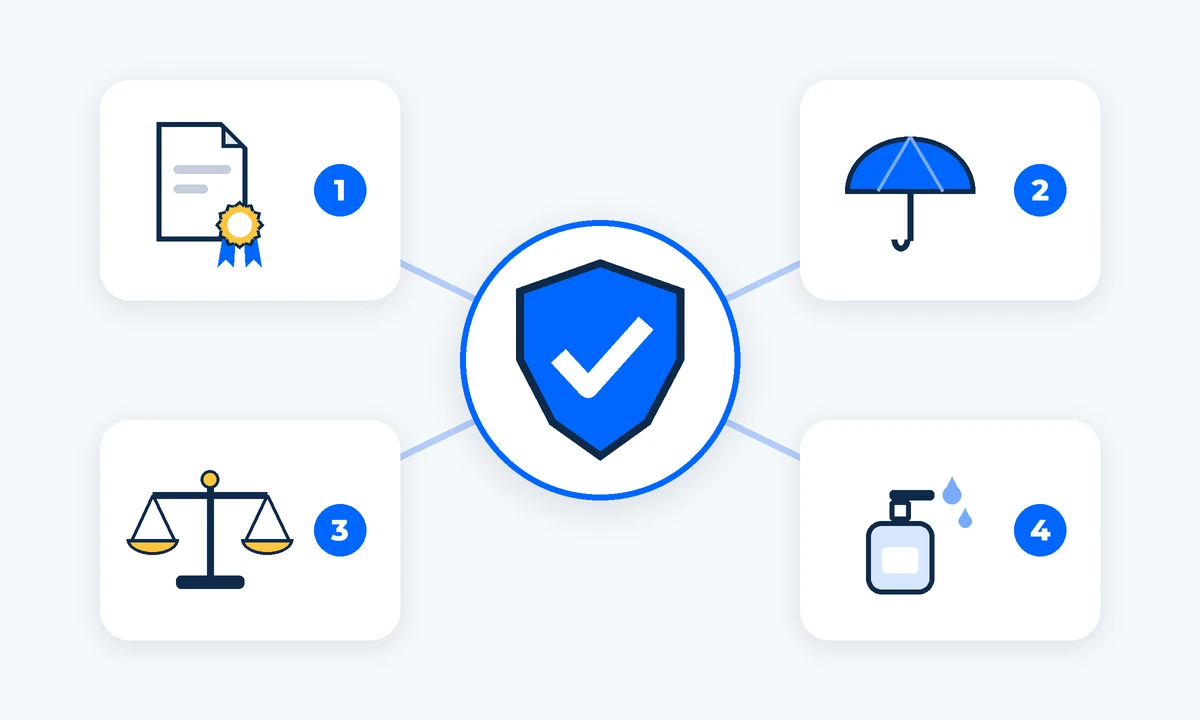 Figure 1. Four conditions behind registration. ① Qualified specialist doctors. ② Malpractice liability insurance. ③ Patient rights and dispute prevention. ④ Safety and infection control.
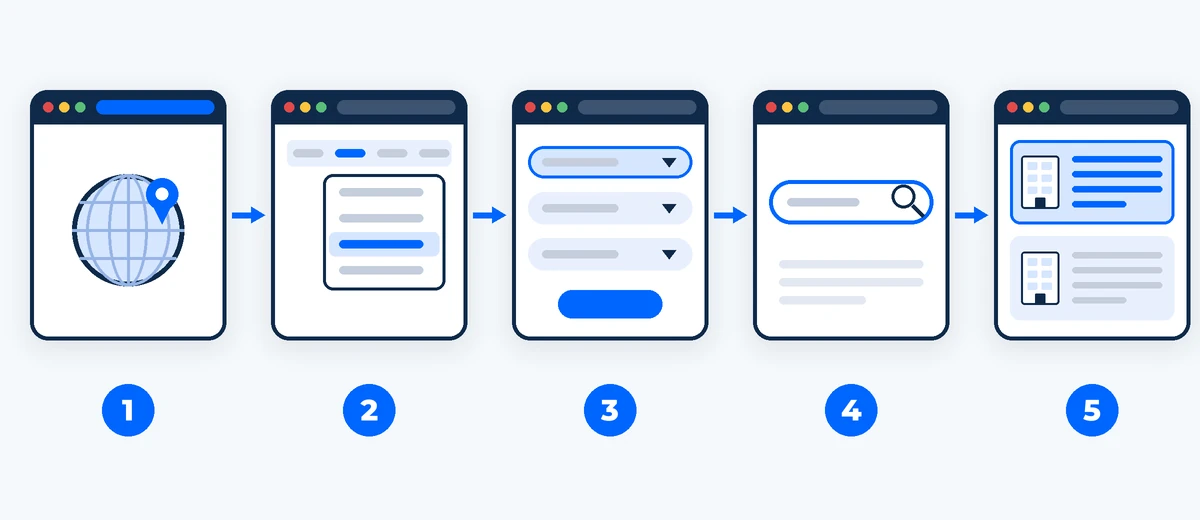 Figure 2. How to search the registry. ① Open medicalkorea.or.kr/en. ② Medical Providers > Registered Hospitals. ③ Filter by type and region. ④ Search by name or Tel. ⑤ Check ID, name, address, contact.
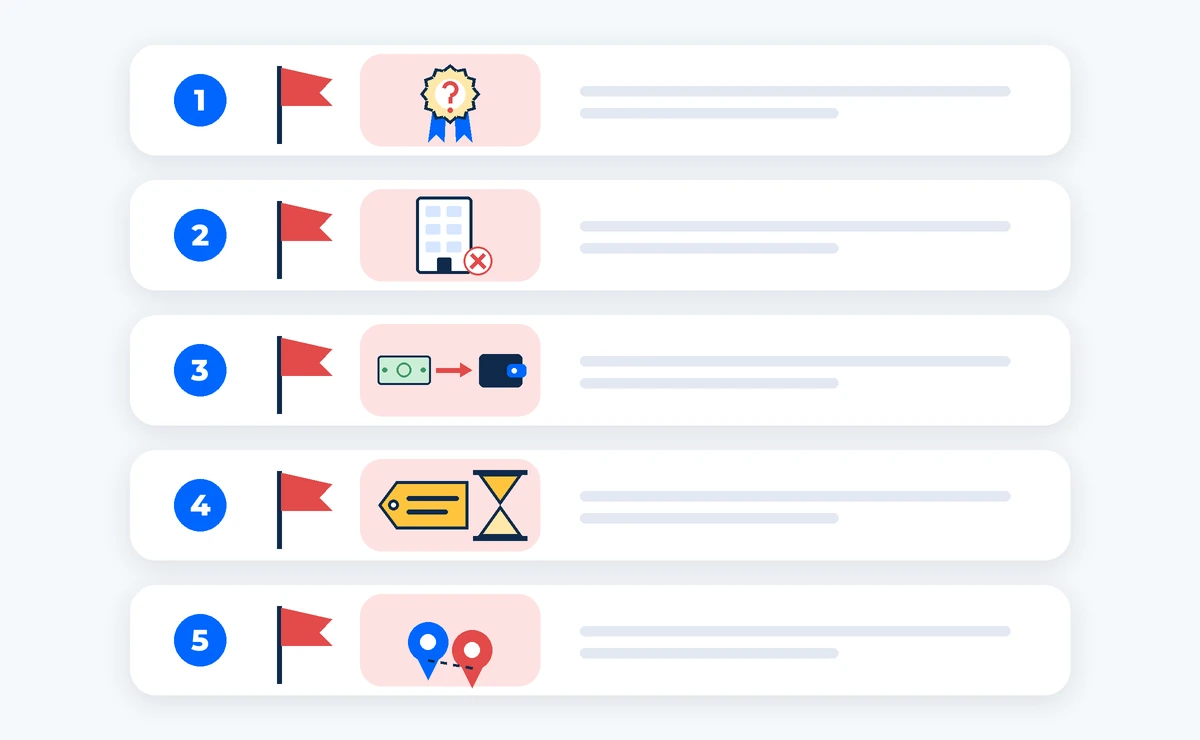 Figure 3. Five red flags. ① Says ‘partnered’ but not in registry. ② Agency not registered. ③ Deposit to a personal account or messenger. ④ Very low prices or pressure to decide. ⑤ Address or phone differs from registry.
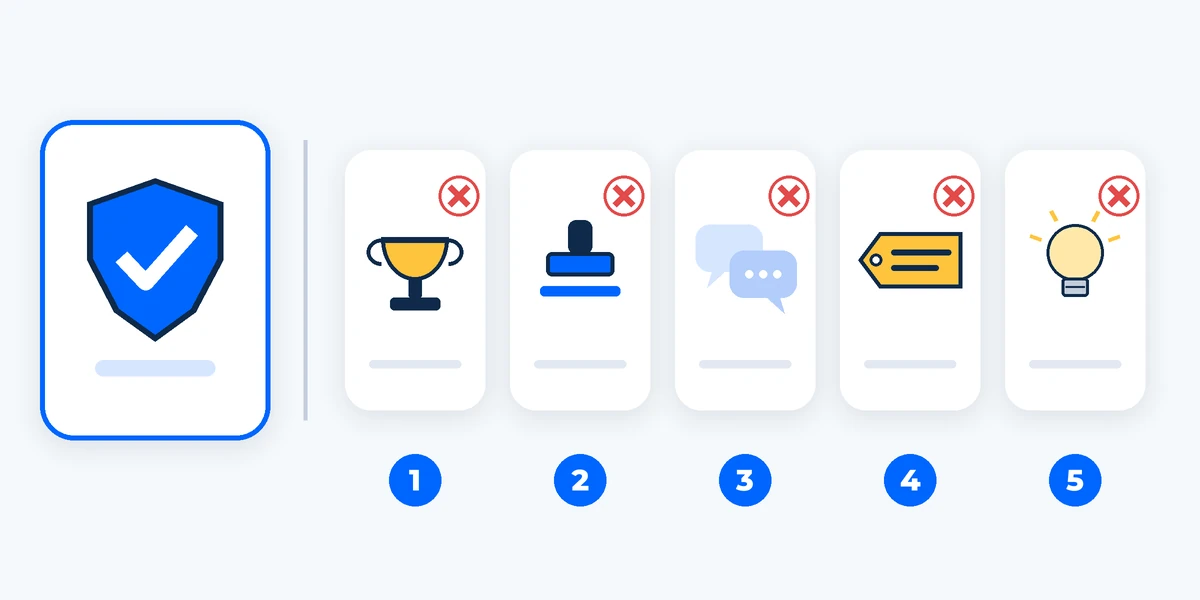 Figure 4. What registration does not mean. ① Not a ranking or recommendation. ② No guarantee of results. ③ Not every staff speaks your language. ④ Does not set prices. ⑤ Does not replace your judgment.